
The initial colonoscopy may be frightening, as you are completely unsure of what to expect. The majority do not actually feel dicomfort about the real exam, but get nervous about the aspects that they cannot visualize. Questions such as what to wear to colonoscopy, whether you’ll pee during a colonoscopy, and what to do if you have to pee during a colonoscopy crop up on a regular basis.
A colonoscopy is one of the most effective preventive examinations for the colon. It identifies polyps, swelling, and initial evidence of colorectal cancer much before the actual onset of symptoms. When a colonoscopy specialist performs it, the procedure remains safe, fast, and highly effective.
Knowing the steps to follow before, during, and after will help remove much of the worry and leave you prepared.
What is a Colonoscopy?
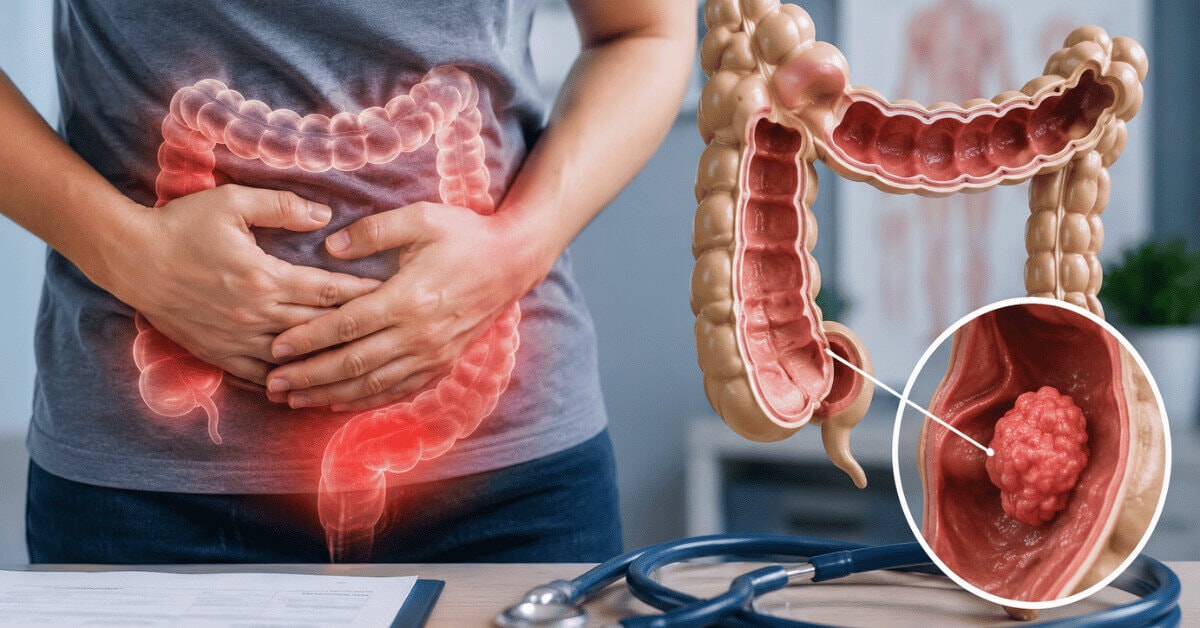
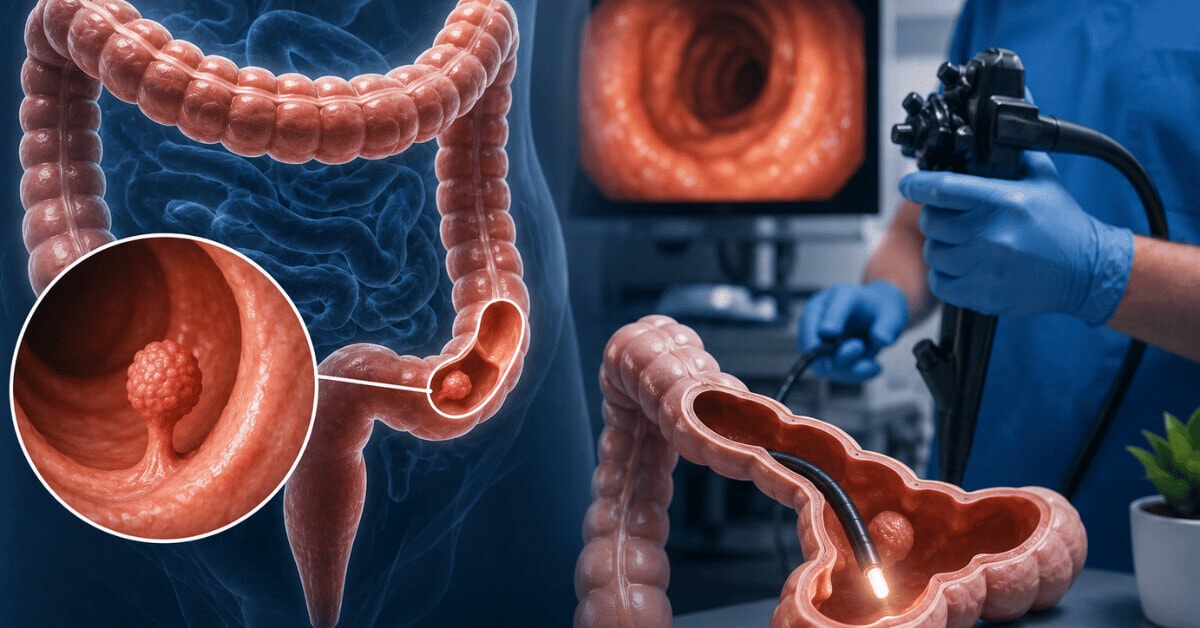
A colonoscopy is a flexible tube with a tiny light and camera used to examine your colon and rectum. It is used by doctors to identify abnormal growths, inflammatory areas, bleeding sources, or any other indication of colon issues.
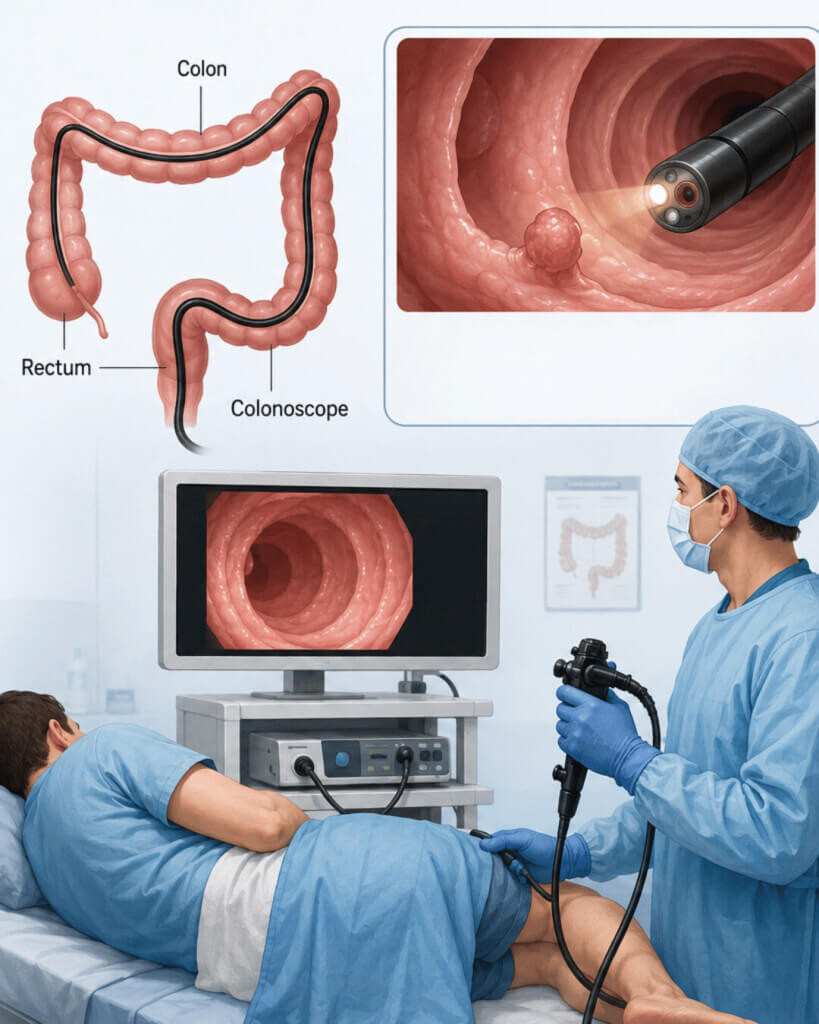
Doctors often suggest a colonoscopy for:
- Colon cancer screening
- Ongoing digestive troubles
- Abdominal pain
- Rectal bleeding
- Long-term constipation or diarrhea
- Family history of colon disease
It works as both a preventive and diagnostic test.
Why Your First Colonoscopy Matters
The first colonoscopy sets a starting point for your colon health. It catches issues early that often give no warning signs at first.
The advantages cover:
- Finding polyps before they turn cancerous
- Spotting inflammation or ulcers
- Discovering reasons for bleeding or pain
- Checking current digestive conditions
Catching problems early usually leads to simpler care.
Before Your First Colonoscopy: What to Expect
Good preparation makes all the difference for a successful colonoscopy.
Consultation and Medical Review
Your doctor discusses your medical history, existing medications, allergies, as well as any foreseen symptoms with you. The step allows the team to select an approach that is the safest.
Diet Restrictions Before Colonoscopy
You will usually move to clear liquids on the day before the exam.
Common choices include:
- Water
- Broth
- Clear juices
- Sports drinks
- Tea without milk
Skip solid food exactly as directed.
Bowel Preparation (The Prep)
The colon needs to be fully empty so the doctor gets a clear view. You drink a special cleaning liquid that triggers several trips to the bathroom. So STAY NEAR A BATHROOM when you start the prep!
Many people say this feels like the toughest part, not the exam itself.
What to Wear to Colonoscopy
People often ask what to wear to colonoscopy.
Good choices include:
- Loose-fitting clothes
- Comfortable clothing
- Easy-to-remove outfits
- Flat shoes
Avoid tight things or complicated layers because you will have to change into a dress-up hospital gown.
Being informed about what to wear to colonoscopy makes it easier to get things moving and feel better.
During Your First Colonoscopy: What Actually Happens?
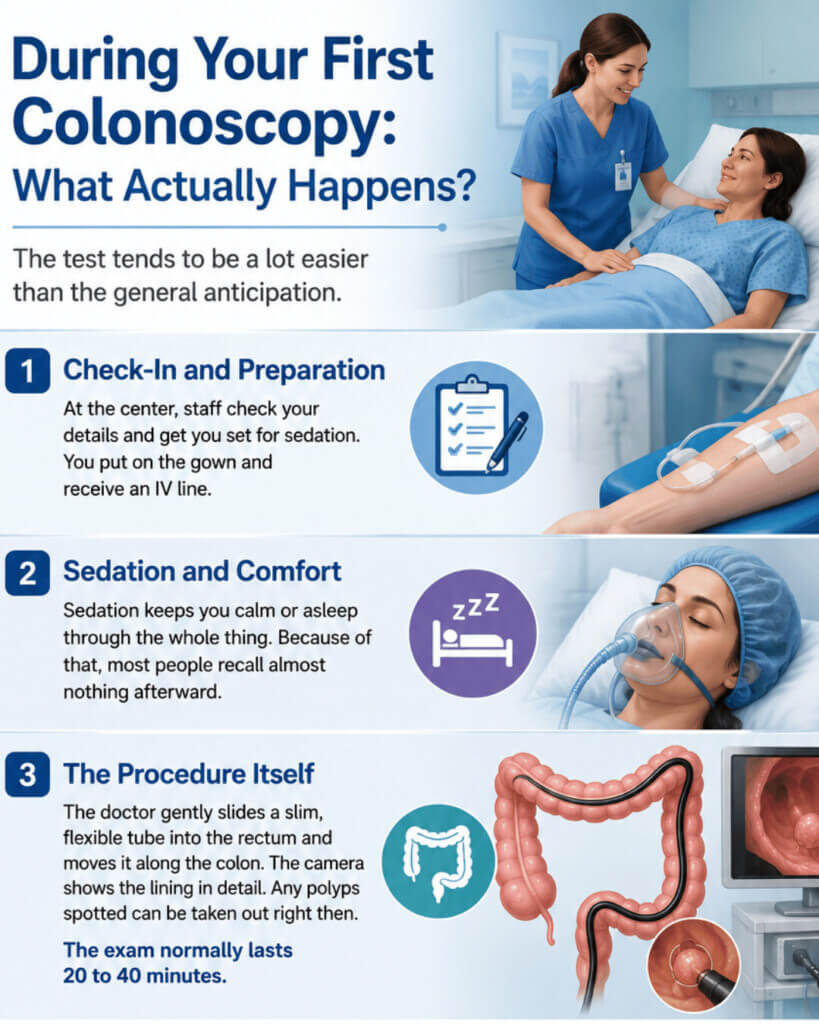
The test tends to be a lot easier than the general anticipation.
Check-In and Preparation
At the center, staff check your details and get you set for sedation. You put on the gown and receive an IV line.
Sedation and Comfort
Sedation keeps you calm or asleep through the whole thing. Because of that, most people recall almost nothing afterward.
The Procedure Itself
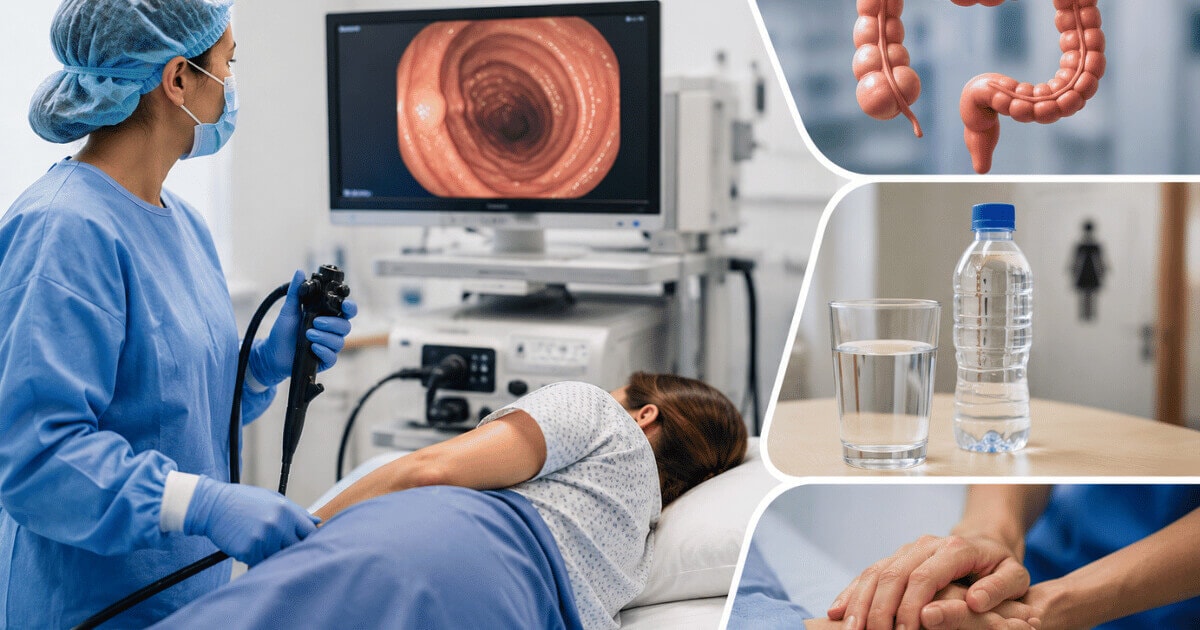
The doctor gently slides a slim, flexible tube into the rectum and moves it along the colon. The camera shows the lining in detail. Any polyps spotted can be taken out right then. The exam normally lasts 20 to 40 minutes.
Will I Pee During Colonoscopy?
This worry shows up often: Will I pee during colonoscopy?
As a matter of fact, it can take place quite rarely. The staff will usually have you use the bathroom before starting sedation.
What If You Have to Pee During a Colonoscopy?
If the thought of what if you have to pee during a colonoscopy crosses your mind, the answer stays simple. The team asks you to empty your bladder right before sedation. Monitoring continues during the short procedure, so this issue stays rare. And if you do DON’T WORRY. Everyone taking care of you understands that you are asleep and will clean you before you wake up.
After Your First Colonoscopy: Recovery and Next Steps
Once the colonoscopy has been completed, focus shifts to rest and proceeding with the next activity. The recovery is typically simple and quick. Most individuals are back to normal a couple of hours after but the drugs will make you feel lazy the rest of the day.
Recovery from Sedation
The employees take you to a recovery area and stay with you until the drug has disappeared. You are likely to experience a sense of being foggy, sleepy, or even a bit lost during a period of time. It means that you have to get someone else to take you home, and that is why you have to have someone available in advance. At least in Florida, UBER or LYFT is not allowed. Most places will need someone 18 or older to drive you back and someone who knows you.
Mild Discomfort is Normal
Some short-term feelings can include:
- Mild bloating
- Gas or cramping
- Feeling tired
- Slight pressure in the abdomen
These come from the air used during the exam and typically fade within hours.
Eating and Drinking After Colonoscopy
You can often go back to regular food and drinks unless the doctor says otherwise. Light meals and plenty of fluids work well, especially after the cleaning prep.
Understanding Your Results
The doctor may share early observations soon after the exam. If polyps came out or samples were taken, lab reports can take several days. This information decides any next steps or extra checks.
Know Your Follow-Up Plan
Results decide when you need the next colonoscopy. It might be in a few years or earlier if something needs watching. Adherence to the schedule helps safeguard your colon over time.
Watch for Unusual Symptoms
The issues remain rare, although contact your doctor in case of excessive bleeding, severe belly ache, fever, or vomiting. Quick action avoids larger troubles.
When to Call Your Doctor After a Colonoscopy
Serious problems rarely occur, but call if you have:
- Heavy bleeding
- Severe abdominal pain
- Fever
- Persistent vomiting
- Dizziness
These signs require prompt care.
Tips to Make Your First Colonoscopy Easier
A handful of easy actions can help your visit go well.
Follow Prep Instructions Exactly
Bad prep can change the results and force a repeat exam.
Stay Hydrated During Prep
Clear fluids cut down on dehydration and ease the cleaning process.
Plan Your Recovery Day
Keep the day after open so you can rest without pressure.
Ask Questions Before the Procedure
Wondering about what to wear to a colonoscopy or bathroom needs feels normal. Bring them up with the care team.
How to Choose the Right Colonoscopy Specialist in Florida
Selecting the right doctor really counts.
Look for:
- Experience in colonoscopy procedures
- Fellowship Trained
- Advanced colorectal expertise
- Clear communication
- Strong patient reviews
A highly qualified colonoscopy specialist in Florida at Colon Rectal MD, led by Dr. Astha Bhatt, MD, helps make the entire process less worrisome and stressful.
Conclusion
First colonoscopy will cause stress beforehand, but the majority feel after the fact that the prep was worse than the test itself. The main gain from screening is clear: early detection. It reveals serious issues before they grow into big problems.
This is why skilled care counts. Looking for a colonoscopy specialist in Florida to assist you throughout the process? Colon Rectal MD is the best choice for advanced colon and rectal care in Florida, including colon screening, diagnosis, and minimally invasive treatments for many colon and rectal diseases. Our colonoscopy specialist in Florida focuses primarily on accurate diagnosis, comfort, and sustained digestive health for patients, as the physician is a colorectal surgeon with extensive hands-on surgical experience.
If you are facing your first colonoscopy or require solid treatment of the colorectum, the appropriate expert can make everything easier.