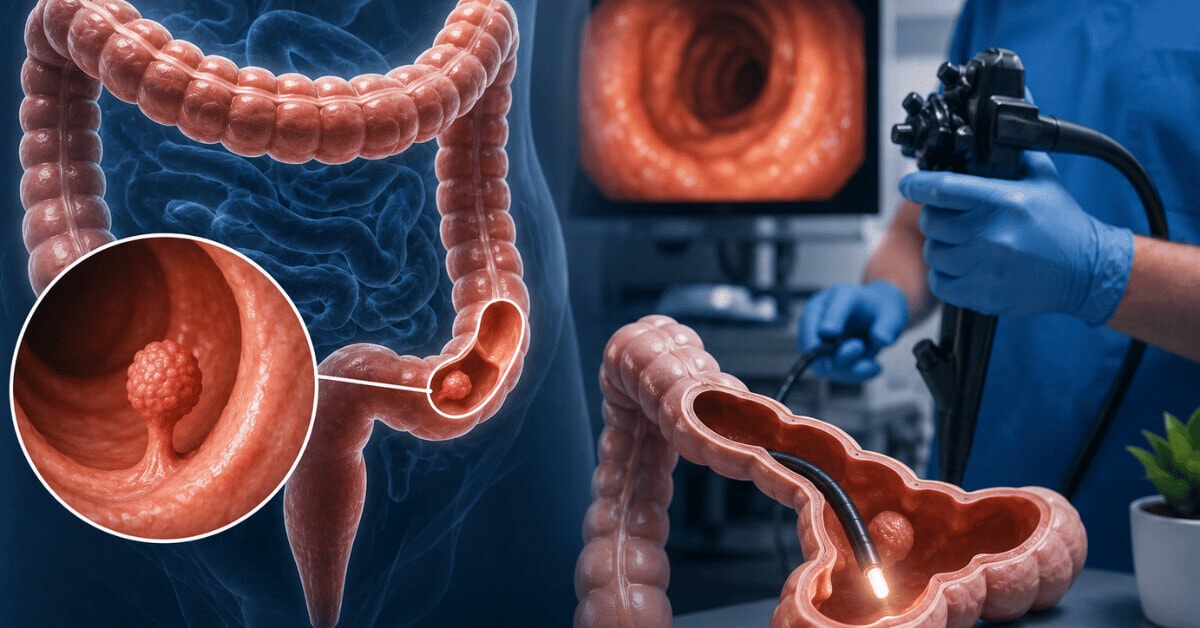


Colon cancer is one of the most prevalent types of digestive system cancer. The good news is that treatment has improved dramatically over the past few decades. Today, doctors can choose from several approaches depending on how far the cancer has progressed, where exactly the tumor sits, the patient’s overall health, and what the treatment is meant to achieve.
Some people need surgery and nothing else. Others need a combination of treatments working together to remove the cancer, stop it from spreading, or keep it from coming back.
Understanding what is available puts patients in a much better position to have real conversations with their doctors and make decisions they feel confident about.
About Colon Cancer
Colon cancer develops when cells inside the colon start growing in a way they should not, forming tumors that can eventually push into surrounding tissue or travel through the bloodstream to other organs. Most of the time, it does not start as cancer. It begins as a small, pre-cancerous growth (polyp) on the inside of the colon, but if not discovered and removed , over 5-10 years , it can develop into cancer.
Common symptoms may include:
- Changes in bowel habits
- Rectal bleeding
- Abdominal discomfort
- Unexplained weight loss
- Fatigue
- Persistent bloating
Types of Treatment Options for Colon Cancer
Surgery
For colon cancer that has not spread beyond the colon, surgery is almost always the starting point. The surgeon removes the section of the colon containing the tumor, along with a margin of healthy tissue and the nearby lymph nodes. Depending on the situation, this may be performed via small incisions with minimally invasive techniques or a larger incision on the abdomen.
When It Is Required:
For Stage I, the usual treatment is surgery. For Stage II, III and IV the treatment varies. Mostly if the cancer is not spread to the liver then surgery is the first step. If it is causing blockage of colon, or bleeding severe enough to cause anemia or hospitalization, then surgery is required to control the symptoms.
Chemotherapy
Chemotherapy involves the use of strong medications to destroy the cancer or to prevent its growth. It might be administered after surgery to eliminate any cancer cells that might remain and lead to a recurrence. It is sometimes used before surgery to reduce a large tumor size for easier surgery.
When It Is Required:
Usually used in Stage III colon cancer, some late Stage II colon cancer and metastatic colon cancer (Stage IV)
Targeted Therapy
Targeted therapy is a more specific treatment approach. Unlike chemotherapy, which kills all rapidly dividing cells, targeted drugs target specific proteins or signaling pathways in colon cancer cells that help them survive and grow. It is generally used with chemotherapy.
When It Is Required:
This type of treatment is used after the tumor testing for colon cancer has been done and targets are identified, usually for advanced or metastatic cancer.
Immunotherapy
Immunotherapy is a simple concept. Cancer cells can be very good at evading the immune system. The idea of immunotherapy is essentially to unmask that disguise so that the body’s own defenses can recognize and attack the cancer. It is usually used for recurrent cancers.
When It Is Required:
Most frequently used for more advanced colon cancers that have some molecular or genetic markers.
Radiation Therapy
Radiation therapy uses high-energy beams to treat the tumor by destroying the cancer cells. It is not used as a first-line treatment for colon cancer, as it is for rectal cancer, but it is used in some cases.
When It Is Required:
May be recommended in certain advanced cases when the cancer has spread to other parts of the body.
Conclusion
Colon cancer treatment has reached a point where even advanced cases have meaningful options. Surgery, chemotherapy, targeted therapy, immunotherapy, and radiation each have a role to play, and the best outcomes usually come from a treatment plan that is built around the individual patient.
If you are in Florida and want to be seen by specialists who focus specifically on colorectal conditions, the team at Colorectal MD, led by Dr. Astha Bhatt, MD, Colorectal Surgeon, offers the full range of diagnostic and treatment services. We invest the time to understand each patient’s situation and design a plan of care tailored to it, with the goal of achieving optimal results throughout the entire treatment process.