
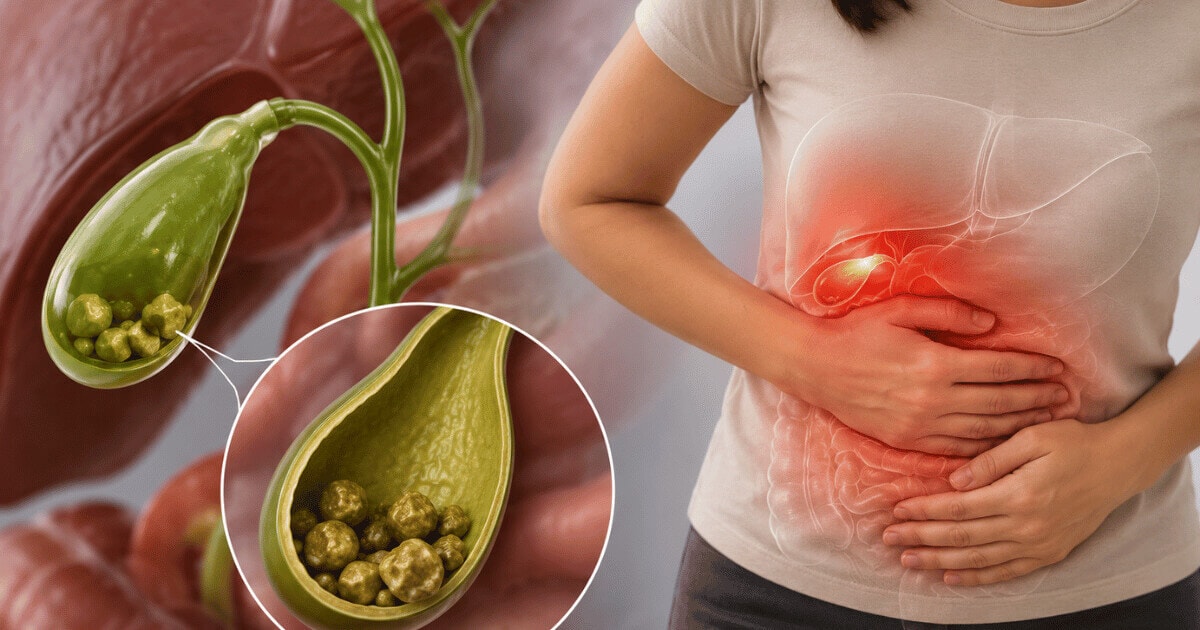
Gallbladder Disease usually starts small. After eating, a bit of bloating, a little ache in the upper part of the stomach and under the right rib cage, perhaps a little nausea here and there. Easy to ignore. Then one day, the pain comes on hard and fast, and then it is unbearable. It is at that time that people tend to discover that they have had a problem with their gallbladder.
The symptoms really manifest themselves after repeated episodes of inflammation. Many patients are unaware of the fact that they have gallstones or inflammation until the bile flow is obstructed and the pain can no longer be ignored.
Being aware of what gallbladder disease is, how it occurs, and when you really need to take action about it can save you a trip to emergency care.
What is Gallbladder Disease?
Gallbladder disease is a general term for a variety of conditions that may occur in the gallbladder, a small gland that stores and releases bile to help digest fats.
When it is disrupted by something, be it blockage, inflammation, or simply the organ not functioning, you get issues that influence digestion and overall health.
Common Types of Gallbladder Disease
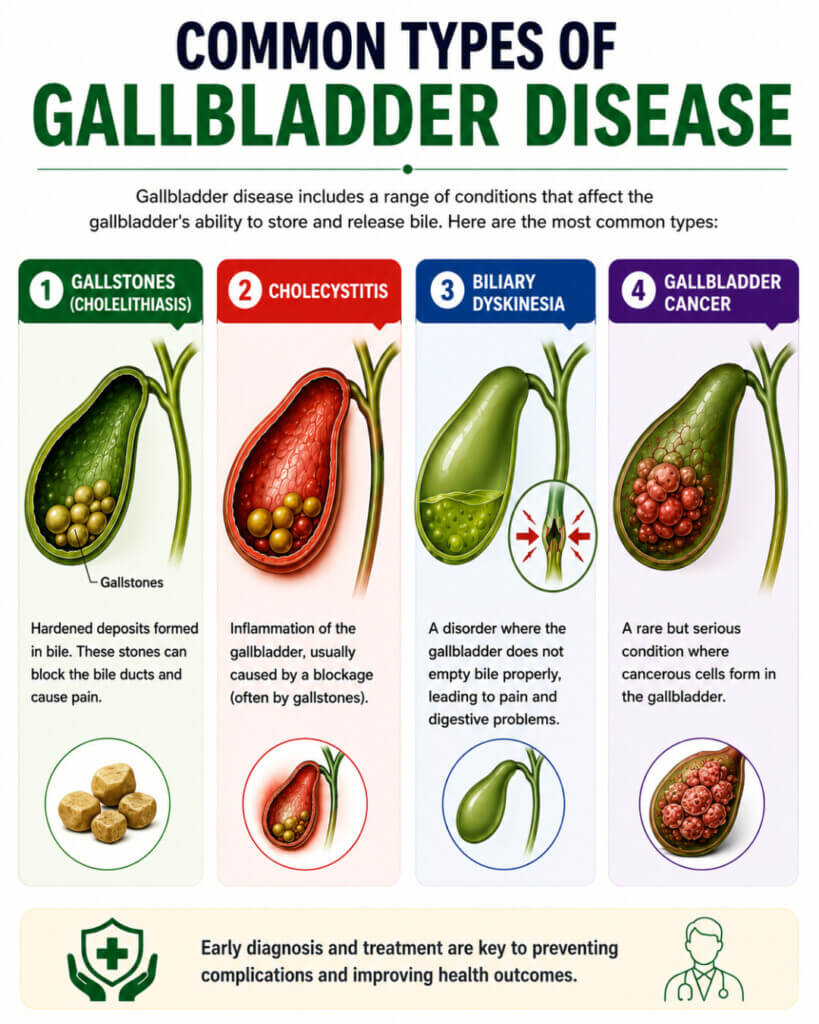
It’s not one single condition. It covers several different disorders:
| Condition | Description |
| Gallstones (Cholelithiasis) | The most frequent hardened deposits formed of bile. |
| Cholecystitis | Gallbladder inflammation that is typically caused by a blockage (often by gallstones). |
| Biliary Dyskinesia | A disorder in which bile fails to pass out of the gallbladder. |
| Gallbladder Infection or Gangrene | Serious complications with infection or tissue necrosis of the gallbladder. |
| Gallbladder Cancer | A rare but serious condition affecting the gallbladder. |
Most complications with the gallbladder start when the gallstones start to block the bile flow and, therefore, cause pain and inflammation.
Who Does Gallbladder Disease Affect?
It can affect a wide range of people, but there are certain groups that are at a much higher risk due to biology, lifestyle, and underlying health issues. It is better to know who is more vulnerable so that it can be caught early.
Individuals with High Cholesterol Levels
The increased risk of getting gallstones is a result of high cholesterol and is the major cause of gallbladder disease. Excess cholesterol in bile may crystallize to form stones, which may also contribute to blockage and inflammation.
Women, Especially During Hormonal Changes
Women are more susceptible to problems of the gallbladder, particularly in pregnancy or hormone replacement therapy. Estrogen increases cholesterol levels in bile, increasing the risk of gallstone formation.
People with Obesity or Rapid Weight Loss
Neither of the extremes is correct. Obesity changes bile composition, and rapid weight loss may drive excess cholesterol into the bile, leading to stones.
Adults Over the Age of 40
Age increases the risk (especially after 40), mainly due to metabolic and bile composition changes.
Individuals with Poor Dietary Habits
Fatty, low-fiber foods are causing gallbladder dysfunction. Unhealthy eating habits may slow bile secretion and increase the likelihood of gallstone formation.
Individuals with Diabetes
Those with a Family History of Gallbladder Disease
Genetics plays a role. In case a close family member has undergone gallstones or a gallbladder problem, you are at a higher risk.
Symptoms of Gallbladder Disease
Depending on the severity, symptoms differ, although there are some typical warning signs that cannot be overlooked.
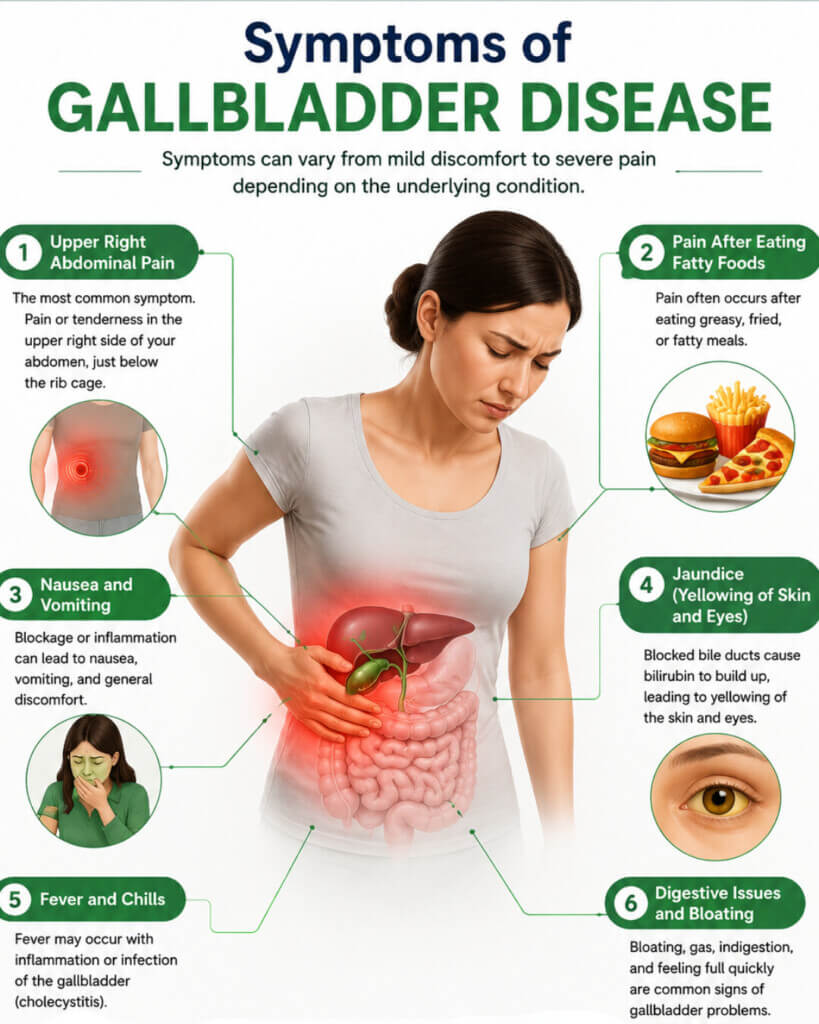
1. Upper Right Abdominal Pain
It is the most common symptom. People feel a sudden, sharp pain in the upper right abdomen that may slowly spread to the back or right shoulder. It may last several hours or just a few minutes.
2. Pain After Eating Fatty Foods
Gallbladder pains can be caused by greasy or heavy meals. The gallbladder contracts to empty bile, and, in the case of a blockage, the pressure rises rapidly.
3. Nausea and Vomiting
Disruption of bile flow affects digestion. Common after-meal symptoms include nausea, vomiting, and general discomfort.
4. Jaundice (Yellowing of Skin and Eyes)
Blocked bile ducts cause bilirubin to accumulate in the body, resulting in yellow skin and eyes. This should be medically addressed.
5. Fever and Chills
In cholecystitis, fever typically indicates infection or inflammation. It may develop rapidly if left untreated.
6. Digestive Issues and Bloating
Constant indigestion, bloating, and pain after eating are indicators that the gallbladder is not coping with its workload, particularly with fat digestion.
Causes of Gallbladder Disease
Awareness of the cause is effective in prevention and treatment.
Gallstones (Primary Cause)
The prime cause is gallstones. They develop when cholesterol and other components harden within the gallbladder, preventing the passage of bile and causing inflammation.
Poor Gallbladder Function
Biliary dyskinesia and other disorders block the normal gallbladder bile discharge, resulting in ongoing symptoms.
Underlying cancer
Gall bladder cancer can sometimes cause right upper quadrant pain.
Underlying Medical Conditions
Some conditions are risk-increasing:
- Liver disease
- Crohn’s disease
- Obesity
- High cholesterol
These interfere with normal bile composition and flow.
How Gallbladder Disease Is Diagnosed
Diagnosis is a clinical assessment, coupled with imaging tests, to determine the underlying cause. Given that GERD, chest pain and gallbladder conditions tend to resemble one another, it is important to get it right to select the right treatment.
Ultrasound
Usually, the first test reveals everything. The sound waves form an image of the gallbladder and can detect gallstones, inflammation, or bile duct plugs. Non-invasive, fast, and efficient in diagnosing the most common causes.
CT Scan
Provides more detailed cross-sectional pictures of the abdomen. Applied in case of a suspected complication such as infection, perforation, or intense inflammation. Helps evaluate the extent to which the condition has developed.
Blood Tests
Examine to detect infection, inflammation, or bile duct obstruction. Also test liver function and look for red flags, such as a high white blood cell count or elevated bilirubin, which may indicate something more serious is occurring.
MRI
MRCP, in particular, provides a clear picture of the bile ducts and other structures. It can be used in cases where the obstructions, ductal stones, or structural problems need a critical evaluation before the treatment.
Treatment Options for Gallbladder Disease
The treatment is different depending on the cause, the severity of symptoms, and the risk of complications. Mild cases can be treated conservatively, although the majority of symptomatic cases, including those of the gallstones, require a definite treatment to avoid recurrence.
Supportive and Medical Management
In early or uncomplicated cases, the focus starts with symptom control and stabilization, often before any surgical decision is made.
- Pain control using analgesics
- IV fluids to maintain hydration
- Antibiotics if infection (cholecystitis) is suspected
Dietary modification, particularly by reducing fatty food, will help to reduce triggers but will not cure the underlying cause.
Laparoscopic Cholecystectomy (Gold Standard Treatment)
The most effective treatment of the symptomatic cases is surgical removal of the gallbladder. Laparoscopic cholecystectomy is minimally invasive and the established standard of care.
- Small incisions with faster recovery
- Short hospital stay or same-day discharge
- Definitive solution with low recurrence risk
Once removed, the bile passes straight out of the liver to the intestine and the digestive process proceeds as usual.
Open Cholecystectomy for Complicated Cases
In the case of severe inflammation, significant scarring, or complication development, open surgery might be required. Used when laparoscopic surgery isn’t safe or possible.
- Larger incision, longer recovery
- Used in advanced or emergency cases
- Ensures safe removal in complex situations
ERCP for Bile Duct Stones
In cases where the gallstones have entered the bile ducts, ERCP (Endoscopic Retrograde Cholangiopancreatography) is applied to remove them.
- Non-surgical endoscopic procedure
- Clears bile duct obstruction
- Often performed before or after gallbladder surgery
Critical for preventing complications like jaundice or pancreatitis.
Gallstone Dissolution Therapy (Limited Use)
In cases where surgery is not an option, cholesterol gallstones may sometimes be dissolved with medications. Rarely used because it’s slow and not reliably effective.
- Only works for specific stone types
- Requires long-term treatment
- High chance of recurrence
Percutaneous Cholecystostomy (For High-Risk Patients)
In patients unable to undergo surgery, a drainage procedure may be conducted to relieve the infection and inflammation in the meantime.
- Temporary solution for critically ill patients
- Tube inserted to drain the gallbladder
- Surgery usually still needed later
When Should You See a Doctor?
Many dismiss the initial gallbladder symptoms as typical digestive problems. The problem is these conditions worsen quietly and can turn into emergencies fast. Knowing when to get checked matters.
- Persistent or Severe Abdominal Pain
- Pain Accompanied by Nausea or Vomiting
- Fever and Signs of Infection
- Jaundice
- Unexplained Digestive Problems
- Sudden Intense Pain (Emergency Situation)
Conclusion
The symptoms of gallbladder disease are mostly disregarded by the majority until the pain becomes so acute that it makes them take action. By then, surgery is usually what it takes. Delayed diagnosis, misread symptoms, and the wrong kind of care are what turn manageable cases into complicated ones.
And that is where the right expertise counts. At Colon Rectal MD, we offer high-quality diagnostic and surgical care of digestive diseases, including gallbladder disease.
Whether it’s recurring symptoms or an assessment by an experienced gallbladder surgeon in Florida, our team provides a precise diagnosis and successful treatment tailored to your condition.